Saturday, June 15, 2024

LEX LUTHOR AND THE PROBLEM OF EVIL: A THEODICY


Part Three: The Existential Problem of Evil    

Everything that I have stated to this point in parts one and two is true, whether you believe it or not is a different matter. But there is another aspect to this whole issue that gets more to the heart of the problem. Though conversations of this nature may commence at the intellectual level, they seldom remain there. The crux of the issue tends to be more of a personal one, the experience of some loss or some deep-seated suffering, mental, emotional or physical. It ultimately falls under the Emotional Problem of Evil (EPE), sometimes referred to as Existential Problem of Evil (ExPoE). But the answer to the problem may be viewed as somewhat paradoxical given the answer to the grief experienced. While accusations for the existence of evil are typically directed at God, He is never the cause of evil,God cannot be tempted with evil, and he himself tempts no one.” (James 1:13b, ESV)[1] He reaches out to comfort us in our grief. But people are generally too angry to respond if they believe He is the cause, or the cure, that was not realized. I’ve experienced such views from family members and coworkers who were angry with God for not curing their ailing loved one.

     If we look to the Old Testament and the prophet Isaiah, he foretold in a vision the kind of man the coming Messiah would be, “He was despised and rejected by men, a man of sorrows, and acquainted with grief; and as one from whom men hide their faces he was despised, and we esteemed him not. (Isaiah 53:3, Emphasis added) Of import here is what Isaiah says regarding the type of a man the Messiah would be. Two Hebrew words that provide us with that type of information are the nouns מַכְאֹב (maḵ’ôḇ) which is in the plural meaning, suffering, or to be in pain, translated here as sorrows. And the Hebrew noun, חֲלִי (ḥălîy) meaning, sick or to be weak translated here as grief. So, the Messiah would be a man enduring multiple kinds of pains and sorrows and stricken with or weakened by the grief of His experiences. By these alone He is well able to understand our suffering. Moreover, the Hebrew verb בָּזָה (ḇâzâ) has the niphal stem in the Hebrew indicating a passive voice and meaning to make despicable or to be worthless. How demoralizing, that He should also be seen as worthless, holding no value. Ever felt like that? Isaiah continued, “But he was pierced for our transgressions; he was crushed for our iniquities; upon him was the chastisement that brought us peace, and with his wounds we are healed. (Isaiah 53:5, Emphasis added) Notice the singular pronouns he, him, his, contrasted with the plural pronouns our, us, we. This indicates what He did for us in going to the cross. “He was pierced”, “He was crushed”, “on Him was the chastisement”, “by His wounds”. “But God shows his love for us in that while we were still sinners, Christ died for us.” (Romans 5:8, Emphasis added) We are the recipients of His grace. What He did was done “For our transgressions”, “for our iniquities”, it “brought us peace”, and by it “we are healed”.

     You want to talk about what’s fair? The apostle Paul, in his letter to the Corinthians stated, “For our sake he made him to be sin who knew no sin, so that in him we might become the righteousness of God”. (2 Corinthians 5:21, Emphasis added) Peter also articulated, “For Christ also suffered once for sins, the righteous for the unrighteous”. (1 Peter 3:18a, Emphasis added) The just for the unjust, again that doesn’t sound fair, but it was necessary. We may never know the reason or be able to answer the question of why. But Christ has promised, “Nevertheless, I tell you the truth: it is to your advantage that I go away, for if I do not go away, the Helper will not come to you. But if I go, I will send him to you”. (John 16:7) The Greek noun, παράκλητος (paraklētos) can be translated a number of different ways, helper, intercessor, consoler, advocate, comforter. The word means, a call to aid or to plead the cause of another. One of the tasks of the Holy Spirit is to “comfort” meaning, to come with or give strength when we are suffering. So, He comes with strength, to give us strength. C.S. Lewis had been a confirmed bachelor for nearly his entire life, that is, before he met Helen Joy Davidman late in life. Upon her passing very shortly after they were married, he was overcome by grief at her loss, prompting him to write his little book, A Grief Observed. In it, he began to sense the futility of it all,

And no one ever told me about the laziness of grief. Except at my job – where the machine seems to run on as usual – I loathe the slightest effort. Not only writing but even reading a letter is too much. Even shaving. What does it matter now whether my cheek is rough or smooth? They say an unhappy man wants distractions – something to take him out of himself. Only as a dog-tired man wants an extra blanket on a cold night; he’d rather lie there shivering than get up and find one. It’s easy to see why the lonely become untidy, finally, dirty and disgusting. (C.S. Lewis, A Grief Observed, 5)

     Solomon’s observations caused him to conclude, “Vanity of vanities, says the Preacher, vanity of vanities! All is vanity. (Ecclesiastes 1:2) In like manner, Lewis queried, “What does it matter now”, losses such as this are painful, no question. It makes us question the futility of it all, what ultimately matters? Is what I’m doing really matter at all? Is there not something more? Something lasting? Something permanent? All Lewis observed early in his suffering was that God appeared, to him, to be silent. As a door slammed shut, bolted and double bolted. At the beginning of grief all our boisterous flailing about both blinds and deafens us to the One who wants to rescue us.

And so, perhaps, with God. I have gradually been coming to feel that the door is no longer shut and bolted. Was it my own frantic need that slammed it in my face...you are like the drowning man who can’t be helped because he clutches and grabs. Perhaps your own reiterated cries deafen you to the voice you hoped to hear.[2]

     Lewis speculated that there may have been something to be learned in it all. About God and about himself. It wasn’t so much a test of faith or love, “He knew it already”. But that which was needful to be learned in her living, had been completed in her passing and so, as Lewis puts it, “the teacher moves you on”. The whole painful experience brought him to one final conclusion, “I need Christ, not something that resembles Him”.[3] It is as I said before, it’s paradoxical. The very one on whom we heap our verbal abuses, is the very one who can help. It is not a call to arms; it is a call for aid. A.W. Tozer observed, “What comes into our mind when we think about God is the most important thing about us”. The most significant questions a person can contemplate, why am I here? what’s the meaning of life? what happens when I die? These are all important questions that, sooner or later, everyone asks and that need answers. But without God there is no ultimate meaning, value, or purpose to life. Without God man is just an accident of nature with nothing to look forward to. When we die, we just pass out of existence with nothing after. Would it matter that we lived at all? Oh, sure we attempt to create meaning and purpose, but to what end? Without God you would have to create it, but only with God does meaning, value and purpose even exist.

     Francis Schaffer developed a two-story model in which the upper-story represents a life with God and equates to a life with meaning, value, and purpose; while the lower-story functions as its antithesis, it is a life without God and devoid of these same qualities. The man who lives in the lower story without belief in the existence of God cannot do so consistently. So, to give his life meaning he needs to make a leap of faith into the upper story. He needs to manufacture something that will give his life meaning, something to take the place of God. Dr. L.D. Rue calls it, “the noble lie”. Within moral relativism is the pursuit of self-fulfillment to the exclusion of social coherence. But doing so creates anarchy across societies. Conversely, the imposition of social coherence under a relativistic outlook against self-fulfillment creates a regime based on totalitarianism. Thus, the necessity for some “noble lie”; that while not believing in objective, universal truths, the lower story, they create the “noble lie” of the existence of objective truth in order to move to the upper story. They cannot adhere to their own paradigm consistently and happily without manufacturing some noble lie that will move them into the upper story to give their world view some meaning. Blaise Pascal has made reference to “a God-shaped vacuum” or a void, which exists in each of us, and to which Augustine affirmed when he stated,

“Thou hast formed us for Thyself, and our hearts are restless till they find rest in Thee”[4]  

     To argue that, in life there is no ultimate meaning, therefore one must create meaning for his life, is entirely inconsistent. A universe without God, is one that exists without meaning, or purpose. Without God life has no value. Atheistic/secular humanism could not argue one way or the other whether something was loving or good, hateful or evil. It’s all relative, there is no objective morality. But a life without God cannot be lived consistently happy in this manner, he must make a leap into the upper story. “For what happens to the children of man and what happens to the beasts is the same; as one dies, so dies the other. They all have the same breath, and man has no advantage over the beasts, for all is vanity. All go to one place. All are from the dust, and to dust all return.” (Ecclesiastes 3:19-20) why do we suffer so; we may never know, or it may take a lifetime of learning to discover it. Just because we cannot see an apparent purpose to our suffering doesn’t mean there isn’t one, it simply has not yet been revealed. Lewis has said,

“God whispers in our pleasures, speaks in our conscience, but shouts in our pain; it is His megaphone to rouse a deaf world.”[5]  

     But must it always be so, regrettably often times it is. An evil man contented to be so needs strong correction, if he learns from it, he has gained; a recompense for the evil he has done if he hasn’t learned. Lewis points out that we progress through life surrounding ourselves with all our creaturely comforts and pleasures, whatever tickles our fancy, until we are abruptly met with some head, heart, or abdominal pain which threatens to bring about some serious illness which causing us to recall our own mortality. He observed,

“I try to bring myself into the frame of mind that I should be in at all times. I remind myself that all these toys were never intended to possess my heart, that my true good is in another world and my only real treasure is Christ. And perhaps, by God’s grace, I succeed, and for a day or two become a creature consciously dependent on God and drawing its strength from the right sources.”[6]

     The danger of course is that once the pain is past, we slip back into those things that distracted us from Him in the first place. For this reason, tribulation becomes a necessity; all those toys with which we pleasured ourselves become meaningless in the shadow of our mortality. Of course, all suffering is not the result of evil acts, death and disease are the outgrowth of a fallen world and God is willing to intervene if we turn to Him. But in my experience and in scripture I have observed that people have one of two responses to the evil they experience, either turning to God or turning away from Him. Pain may seem to us a terrible way for God to gain our attention, but the old adage is still true, “there are no atheists in fox holes” and that may be the extent to which He must go to get it. These three articles I have written on this subject will not, in all likelihood, answer all your questions or settle the issue once and for all. But hopefully in some small way it helps you to understand how much God really loves you. Not by His allowance of certain evils to persist, but that there are reasons we simply do not understand and that may take a lifetime to understand, so in the interval we need to trust Him. Either directly or indirectly we chose this. The human condition was self determined, and we bear the consequences. But He knows us, He loves us, and He can help us if we trust Him. It doesn’t mean that there will be no more pain or death or disease, “For he makes his sun rise on the evil and on the good, and sends rain on the just and on the unjust.” (Matthew 5:45), but it does mean that He will go with us through the storms in our lives. And in a day yet to come all these will pass out of existence and not we ourselves,

“He will wipe away every tear from their eyes, and death shall be no more, neither shall there be mourning, nor crying, nor pain anymore, for the former things have passed away.” (Revelation 21:4)


[1] Unless otherwise indicated, all scriptural quotes are from The Holy Bible. English Standard Version, with Strong’s Numbers (Wheaton IL: Crossway, 2008).

[2]   C.S. Lewis, A Grief Observed (HarperOne Publishers, New York: NY, 2001), 46.

[3] Ibid., 65

[4] Augustine of Hippo, “The Confessions of St. Augustin,” in The Confessions and Letters of St. Augustin with a Sketch of His Life and Work, ed. Philip Schaff, trans. J. G. Pilkington, vol. 1, A Select Library of the Nicene and Post-Nicene Fathers of the Christian Church, First Series (Buffalo, NY: Christian Literature Company, 1886), 45.

[5] C.S. Lewis, The Problem of Pain (HarperOne Publishers, New York: NY 1996), 91.

[6] Ibid., 106-7.


Saturday, May 18, 2024

JESUS CHRIST & HIS BEING Did He Even Exist: PART ONE


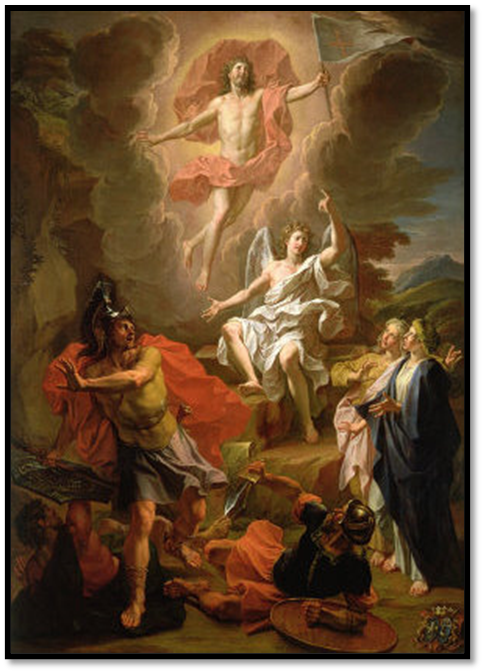
By Noel Coypel - http://www.1st-art-gallery.com/Noel-Coypel/The-Resurrection-Of-Christ,-1700.html, Public Domain, https://en.wikipedia.org/w/index.php?curid=28274624

Internal Evidence:

The Gospel Account

Ostensively the gospel accounts provide the most extensive volume of information about Jesus and all that He supposedly said and did. But what is at issue for those arguing against the historicity of Jesus has to do firstly with the credibility of the gospel accounts themselves.

     Primarily, the collective sacred scriptura that comprise the ancient MSS of Hebrew, Aramaic, and Greek that encompass the Biblical account, as a whole, is self-attesting. In other words, its truth claims are verified, corroborated, or authenticated by what it avers of itself. Additionally, the Holy Spirit authenticates our sense that this is the word of God. However, these views are unpersuasive to those who do not share the Christian world view. As a result, a more intellectual, academic study seems to be necessary. As such, the locus of my inquest will center squarely on the Gospel of Mark. Not so much the language of the text itself, but more specifically on the criteria that has been agreed upon by historians who examine ancient documents and test their reliability, whether they themselves be scholars of the Christian persuasion or not. My thesis is namely this, that my English translation of the gospel of Mark is a historically reliable account of selected events surrounding the life, death, and bodily resurrection of Jesus Christ. I have employed the adjective “selected” to indicate that while Marks’ gospel does not divulge every detail concerning the life of Jesus of Nazareth, nevertheless, what he does relay is ipso facto, historically reliable.

     No other name has been put forward by any other church historian or church father regarding the unanimous designation of John – Mark as the author of the gospel that bears his name. Irenaeus, Clement of Alexandria, Tertullian, Origen, Jerome et al were all in agreement on this point. The most ancient reference we have of Mark as its author is that of Papias of Hierapolis (A.D. 60 – 130), who was most active in his written compositions during A.D. 90 – 110. It is believed by some that Papias was a companion of John and acquainted with Polycarp of Smyrna, (A.D. 69 – 155), also a disciple of John, therefore closest to the time of Mark’s autograph. Church historian Eusebius, quoting Papias, has stated:

And John the Presbyter also said this, Mark being the interpreter of Peter whatsoever he recorded he wrote with great accuracy but not however, in the order in which it was spoken or done by our Lord, for he neither heard nor followed our Lord, but as before said, he was in company with Peter, who gave him such instruction as was necessary, but not to give a history of our Lord’s discourses: wherefore Mark has not erred in anything, by writing some things as he has recorded them; for he was carefully attentive to one thing, not to pass by anything that he heard, or to state anything falsely in these accounts. (Emphasis added)[1]

So, John the disciple, or John the elder, affirmed to Papias who spoke with him that Mark was the author of the gospel attributed to him.

     The question invariably arises, why is Marks’ gospel central to this particular study? Two reasons, first, the gospel of Mark is reasoned to be the first of the four gospels written, and second, it appears to be the source for the gospels of Mathew and Luke. Utilizing the gospel of Mark as a test case for the veracity of the gospels, we need to cross three bridges. First, we need to get from Jesus to John-Mark. John-Mark must offer reliable testimony to inform us of the truth regarding Jesus of Nazareth and be close enough to the events in question, so as not to embellish the accounts that he offers. Bridge two, the original document which Mark wrote, his autograph, is no longer available, but Greek copies of his work do exist. So, we must determine if extant Greek manuscripts of Mark’s original autograph have been faithfully transmitted. Incidentally it is worth noting that there exist no autographs for any other ancient document for any other figure or event of antiquity, only copies. Bridge three will address the discipline of translation. Have the translators of those ancient Greek manuscripts faithfully transcribed what the text states? I am going to accomplish this by looking at three objections that correspond to the three bridges I just mentioned. First, biased translation – this is the view that the church historically has messed with the translation and therefore our English Bibles are unreliable. Second, tainted transmission – this is the view that Mark may have been trustworthy to the original autograph he wrote, but can we trust the current, extant Greek MSS, the copies of Mark’s autograph? Third, unreliable testimony – this is the view that early Christians were unable, or unwilling, to tell the truth about who Jesus was. Believing that Jesus was merely a Jewish peasant who they aggrandized into some demi-god.

1.      The Objection of Inaccurate Translation

     At issue here is the belief that the church has somehow biased the translation. Among scholars however this belief is nothing more than mere posturing. But among the general populace this view holds significant sway. Hermeneutics is the science and art of biblical interpretation. It is considered a science because it has rules, and these rules can be classified into an orderly system. It is considered an art because communication is flexible, and therefore a mechanical and rigid application of rules will sometimes distort the true meaning of a communication.[2] But in what sense is hermeneutics a science? Hermeneutics is considered a science because it deals with what the "rules of interpretation" are. For example, the golden rule, the law of first mention, the law of double reference, the law of recurrence, and the law of context. In what sense then is hermeneutics an art?  The art of hermeneutics deals with how those rules of interpretation should be applied. In other words, when translating from the source language, Hebrew, Aramaic, or Greek, into the receptor language, in our case English, translation can employ the functional, thought-for-thought approach known as dynamic equivalency, or a more literal, word-for-word approach known as formal equivalency. The dynamic equivalency approach to translation attempts to convey what the original text means. The formal equivalency approach to translation attempts to convey what the original text says, leaving its meaning up to the reader to determine.

     With the golden rule of interpretation, when the plain sense of scripture makes common sense, seek no other sense; therefore, take every word, at its primary, ordinary, usual, literal meaning unless the facts of the immediate context, which is another of the rules of interpretation, studied in the light of related passages and axiomatic and fundamental truths, indicate clearly otherwise. Another of the rules of interpretation is the law of first mention. This rule of interpretation states that the first occurrence in scripture of a particular Christian doctrine provides the simplest most fundamental, inherent meaning of that doctrine with the understanding that additional scriptural references to it will expand our understanding of that particular doctrine. A third rule of interpretation is the law of double reference which is closely associated with the fourth rule of interpretation, the law of recurrence. In the law of double reference, a passage of scripture speaks of two different persons or events that are separated by a lengthy period of time. The fact that a gap of time exists is known because of other scriptures. In the law of recurrence, two blocks of scripture record the same event; the second block adds more information and provides additional details to the first. The final rule of interpretation is the rule of context. In this law any passage apart from its context, is pretext. A pretext is a purpose or motive alleged or an appearance assumed in order to cloak the real intention or state of affairs.[3] In the rule of context, passages of scripture are not interpreted in isolation. In other words, surrounding words, phrases, sentences, paragraphs, passages, chapters, genera, and testaments are all taken into consideration. 

     When a team of translators sit down, their first task is to determine if the translation they wish to produce will be formal or dynamic equivalency. In a formal approach, translators will attempt to convey exact wording as found in ancient manuscripts. In a dynamic approach, translators will attempt to convey ideas or meanings expressed in those same ancient manuscripts. It is worth pointing out that even a formal approach to translation will require some reworking to the text for two reasons. One, Hebrew and Greek have fewer characters in their alphabet, 22 and 24 respectively, compared to the 26 found in the English language. This results in fewer words that can be formed. Secondly, sentence structure in Hebrew is verb, subject, object; while English is subject, verb, object, style language. To read Hebrew in literal English would be awkward requiring a reworking of sentence structure to improve syntax to make reading it in English easier. Although Greek does possess more characters than Hebrew in its alphabet, we have the same problem, not as many words can be formed as in English. This observation necessitates insertion to the text to improve comprehension of what is being conveyed to the reader in the passage. A number of translations exist across the spectrum, from formal to functional (dynamic). The chart below indicates this.


  Regardless of which approach to translation is employed, Greek scholars, Christian or non-Christian, affirm the process as accurate and unbiased.

2.      The Objection of Tainted Transmission

     As I mentioned previously, we don’t possess the original autograph of Mark; we have copies of it. We actually don’t have the original of any ancient document, only copies. As an example, Paul’s letters were passed around from church to church and in the process of time would start to decay, so copies were necessary. The question isn’t whether we have Mark’s original writing, the question is how many copies of the original do we have? How early were they written? And how closely do they date to the original autograph? Roman Historian Tacitus wrote “The Annals”, a History of the Roman Empire ca. A.D. 100. The earliest extant copy of his work indicates an almost 1,000-year span between those copies and its original writing. The same could be said of Athenian Historian Thucydides’ work, “History”. Only 20 copies exist of Tacitus’ Annals, and just 8 copies for Thucydides’ History, yet we trust them implicitly as accurate accounts. By contrast, the gospel of Mark was written, scholars estimate, between A.D. 40 – 60. The first MSS of his gospel date back to A.D. 200, a differential of 140 – 160 years and there are thousands of extant MSS of his gospel. As an example, the Chester Beatty Papyri, discovered in the 1930’s, date back to the 2nd and 3rd centuries and written in the Greek language. There are eleven manuscripts in all, seven of the Old Testament, three of the New Testament, and one of the book of Enoch. P45 was a codex of 110 leaves containing portions of all four gospels as well as the book of Acts. Two small leaves in this collection contain chapters 4:36 – 9:31 of Mark’s gospel.

     With respect to textual variants, these are sections within manuscripts where there is a measure of uncertainty about the text. One manuscript will have a word or a phrase where another manuscript will have a different word or phrase. NT textual commentators Westcott and Hort have indicated the only one sixtieth rise above “trivialities” and can be called “substantial variations”. In short, the NT is 98.33% pure. Greek scholar Ezra Abbott has stated that about 19/20 (95%) of the readings are “various” rather than “rival” readings, and about 19/20 (95%) of the rest make no appreciable difference in the sense of the passage. NT Greek scholar John A.T. Robertson has said that the real concern is with about “a thousandth part of the entire text”. So, the reconstructed text of the New Testament is 99.9% free of any real concern. Theologian and Church Historian Philip Schaff has estimated that of the 150,000 variants known, only 400 have affected the sense; and of those, fifty were of any real significance; and of those, not one has affected any article of faith. In fact, multiple variants can help to establish the original.

1.      Y#u have won ten million dollars.

2.      Yo# have won ten million dollars.

3.      You #ave won ten million dollars.

     In this example you have three variant readings. We can see from two and three, that one is missing the vowel “O”. We can see from one and three, that two is missing the vowel “U”; and we can see from one and two, that three is missing the consonant “H”. So, this indicates that even with mistakes occurring, 100% of the message conveyed still comes through. Biblical critic Bart Ehrman has admitted,

In fact, most of the changes found in early Christian manuscripts have nothing to do with theology or ideology. Far and away the most changes are the result of mistakes pure and simple – slips of the pen, accidental omissions, inadvertent additions, misspelled words, blunders of one sort or another. (Ehrman, Misquoting Jesus, 55; Emphasis added).  

Manuscript expert Sir Frederick Kenyon has stated,

The interval between the dates of the original composition and the earliest extant evidence becomes so small as to be in fact negligible, and the last foundation for any doubt that the scriptures have come down substantially as they were written has now been removed. Both the authenticity and the general integrity of the books of the New Testament may be regarded as finally established. (Kenyon, Bible and Archaeology, 288; Emphasis added).

     The gospel of Mark is the shortest of the four in the biblical canon. Among historical scholars when studying ancient documents, the shorter reading is usually the earliest, or the original. Variant readings are few and insignificant enough, and the science of textual criticism is sophisticated enough to guarantee a virtually 99% reconstruction of Mark’s original words. There is no major doctrine or article of faith that is affected by textual variants. In Mark 1:1, some MSS do not include the phrase, “the Son of God”. But this is by no means an enigma because if you look further down in the text, you will notice in v.11, God the Father refers to Jesus as the Son of God, “You are My beloved Son”. In fact, Jesus is referred to as the Son of God thirty-nine times in the NT. So, a single verse which does not contain that particular phrase in an earlier manuscript is not going to affect that doctrine adversely as the claim exists at various points throughout the NT. Furthermore, those other thirty-nine occurrences, do not exist as variants. Mark 3:14 states that Jesus appointed twelve “apostles”, yet the noun “apostle” does not appear in some earlier manuscripts. Nevertheless, they are referred to as “apostles” at other points in the NT. There are other variants in Mark’s gospel, but again, no doctrine or article of faith has been negatively affected. My English Bible has been translated from a manuscript tradition which guarantees the reliable transmission of the Greek original of Mark and all that he had asserted about the existence of Jesus and all that He said and did. If we have to throw that out as unreliable, then we better throw out every other translation of ancient document, because we have far more on Mark and the NT than any other ancient document accepted as factual.

Note: Part Two will address, The Reliability of Mark’s Testimony and the issue of, Multiple Attestation or The Presence of Independent Witnesses.  


[1] C.F. Cruse, Translator.  Eusebius’ Ecclesiastical History: Complete and Unabridged 3.39.15, Eusebius quoting Papias (Peabody, MASS.: Hendrickson Publishers, 2018), 105.

[2] ​Henry A. Virkler and Karelynne G. Ayayo, Hermeneutics: Principles and Processes of Biblical Interpretation ed.2 (Grand Rapids, MI: Baker Academic, 1981), 16.  

 [3] “Pretext.” Merriam-Webster.com Dictionary, Merriam-Webster, https://www.merriam-webster.com/dictionary/pretext. Accessed 25 Mar. 2023.


Sunday, May 12, 2024

WONDER WOMAN & THE GOD KILLER


By Wonder Woman Movie Poster (#6 of 16) - IMP Awards, Fair use, https://en.wikipedia.org/w/index.php?curid=51137764

“My dear child, that is not the god killer, you are. Only a god can kill another god” – Ares.

Wonder Woman (2017)

The back story for this movie comes from Greek mythology. Earth was ruled by the gods, chief among them was Zeus king of the gods. He was the creator of men who initially were good, but Ares, who was recognized as the god of war, and son of Zeus and Hera, corrupted the hearts of men so the gods created the Amazons “to influence men's hearts with love and restore peace to the Earth”. Hippolyta was queen of the Amazons with whom Zeus had intimate relations the offspring of which was Diana of Themyscira. But this was not the story Diana received from her mother Hippolyta. She informed Diana that she created her out of clay and plead with Zeus to give her life. So, Diana came to believe that she had no father.

     As the story goes, the Amazons went to war against Ares, the god of war. Zeus led the gods to the defense of the Amazons, but Ares killed all the gods with the exception of Zeus who exhausted the last of his power to strike Ares down, causing him to retreat. Suspecting that Ares may return someday, Zeus left the Amazons a weapon, one strong enough to kill a god. The god killer. “With his dying breath, Zeus created this island to hide us from the outside world, somewhere Ares could not find us”.

     There are a number of problems with the statement by Ares that, “only a god can kill another god”. Firstly, any god who is truly God would be infinite in existence. Ares and Diana are created beings which would indicate that they are finite, contingent beings. Everything which exists is only able to exist in one of two ways, either contingently or necessarily. A contingent being is one that can not exist. In other words, a contingent being is that which has the potential not to exist at all. Its existence is predicated on the existence of something, or someone else already in existence. Secondly, it is not possible for an infinite being who exists necessarily, to create another infinite being who also exists necessarily, as a Necessary Being is that which cannot not exist. A necessary being does not have the potential not to exist. Such a notion would invoke a contradiction. Necessary existence indicates that that thing cannot come into existence nor is it able to go out of existence. Its existence is perpetual. Necessary existence is intrinsic to the nature of that which possesses it, shapes and numbers are said to exist necessarily. But shapes and numbers lack the capacity to create, only personalities are capable of that. Thomas Aquinas has noted,

“that which does not exist only begins to exist by something already existing.[i] Therefore, if at one time nothing was in existence, it would have been impossible for anything to have begun to exist; and thus, even now nothing would be in existence--which is absurd…but there must exist something the existence of which is necessary…. Therefore, we cannot but postulate the existence of some being having of itself its own necessity, and not receiving it from another…This all men speak of as God”.[1]  

     In other words, Aquinas is speaking of Gods’ necessary existence and His divine aseity. God exists a se from the Latin meaning “by itself” or “in itself” indicating that He is self-existent, requiring nothing, and no one, for his being. So, enquiries into Gods’ origin are meaningless given how He exists. He simply exists. Novatian has stated,

 He is always like and equal to Himself. And what is not born cannot be changed: for only those things undergo change which are made, or which are begotten; in that those things which had not been at one time, learn to be by coming into being, and therefore to suffer change by being born. Moreover, those things which neither have nativity nor maker, have excluded from themselves the capacity of change, not having a beginning wherein is cause of change. And thus, He is declared to be one, having no equal. For whatever can be God, must as God be of necessity the Highest. But whatever is the Highest, must certainly be the Highest in such sense as to be without any equal. And thus, that must needs be alone and one on which nothing can be conferred, having no peer; because there cannot be two infinites, as the very nature of things dictates. And that is infinite which neither has any sort of beginning nor end.[2] (Emphasis added)

     In other words, necessary existence is intrinsic to His nature and therefore lacks all potentiality, He could not be otherwise; “what is not born cannot be changed”. That which is born, or created, exists contingently and is therefore subject to change.

     Furthermore, the existence of gods and demi-gods is squarely refuted biblically and historically. “Before me no god was formed, nor shall there be any after me”. (Isaiah 43:10, ESV)[3] In the Hebrew the phrase is rendered, לֹא־נ֣וֹצַר (not, be formed) אֵ֔ל (god) וְאַחֲרַ֖י (and; after; I) לֹ֥א (god) יִהְיֶֽה׃ ס (be). In reality there is no “before me” with God, nor is there an “after me”. He just is. Being is in its proper sense peculiar to God, and belongs to Him entirely, and is not limited or cut short by any Before or After, for indeed in him there is no past or future.[4] Furthermore, Cyril has noted,

God is the source of all things, but he himself has no origin. Everything that exists came into being through him, but he was not born of anyone – he is the one who is and who is to come.[5]  

     The term פָּנִים (p̱âniym) from the root word פָּנָה (p̱ânâ) translates as “before”. In the receptor language, or English, it means, “to be in advance of” or “prior to”, but in the source language, in this case Hebrew, the term is not a time reference but a positional one and functions as an adverb which modifies the first person, personal pronoun which follows it, “me”. Literally meaning “in front of” or “before my face”. The adverb לֹא meaning “not” but translated as “no”, modifies the noun which follows it, “god”, by way of negation. The noun “was” functions as a past indicative of “be” or “to be” in respect of that which exists. Or in this instance, that which does not, or did not exist. The verb יָצַר (yâṣar) meaning to “be formed”, “fashioned” or “created”. So, the first part of this verse (10.a) literally translates as, “Before my face, no god was ever fashioned”.  What may be called gods are in actuality no gods at all, for “The idols of the nations are silver and gold, the work of human hands. They have mouths, but do not speak; they have eyes, but do not see; they have ears, but do not hear, nor is there any breath in their mouths. (Psalms 135:15-17)

     In the second part of the verse, (10.b) “nor shall there be any after me”, the Hebrew term לֹה (lôh) is the same as the term utilized in 10.a. It is a primitive particle meaning “not”, translated here as “nor” and as previously noted, is a negation modifying the verb which follows, הָיָה (hâyâh) translated as “be” and meaning “to exist” or “to have” existence and functions as a present-tense verb, and always in the emphatic sense. The verb “shall” does not appear in the original Hebrew MSS, it is added for the purpose of clarity, to improve syntax. Typically, present day usage is interchangeable between “shall” and “will”, though “will” is more common. Historically, the two verbs have differing meanings. The verb “shall” was applied in instances referring to future actions, “will” was used in instances referring to present actions. The use of “shall” in this translation indicates a reference to future actions. Like the verb that precedes it, “shall”, the term “there” does not appear in the original Hebrew MSS its inclusion can be applied a number of different ways, subject to the context. Given the context the term “there”, functions as a noun which refers to place or position. I have already parsed the Hebrew verb הָיָה (hâyâh) which appears in 10.a and is repeated here in 10.b, so there is no need to traverse that ground again. The term “any” exists as a pronoun which typically reference persons but can reference things or objects. In 10.b the latter would be true. The term is a numerical or quantifiable reference in the negative as in “not any”.  The Hebrew adverb אַחַר (’aḥar) meaning literally “the hind part” and translated here as “after”, qualifies the verb which precedes it, “be”.  As an adverb it can reference a particular place, as in behind. Or a particular time, as in afterwards. The context of 10.b suggest that this is a time reference, not a positional one, as in 10.a. The first person, personal pronoun אֲנִי (ănı̂y) meaning “I” but translated as “me” answers the question of who the verse is in reference to, as the Hebrew only uses the pronoun once in the verse, though it appears twice in translation to improve clarity. So, 10.b literally translates as, “There shall never exist even one from this time forward”. The verse in its entirety literally translates, “Before my face, no god was ever fashioned. There shall never exist, even one, from this time forward”. As Tatian has noted,

Our God did not begin to be in time: He alone is without beginning, and He Himself is the beginning of all things.” (Emphasis added)[6]

Contrasted with the gods which are of human contrivance and innovation, to usurp that which was true from the beginning, that God is, and there is no other. “In the beginning God” (Gen. 1:1) and as He says to Moses, “I Am” (Ex. 3:14).

     Moreover, not only are Diana of Themyscira and Ares the god of war created beings, as I previously indicated, but Zeus also is a created being, the son of Cronos and Rhea. They are therefore, by definition, finite, contingent beings. They posses the potential not to exist at all. If they are truly gods what need would there be of procreation? Their existence as gods would be perpetual. Given that it is not, they therefore cannot exist as gods. Lactantius has stated,   

Wherefore, as I often reflect on the subject of such great majesty, they who worship the gods sometimes appear so blind, so incapable of reflection, so senseless, so little removed from the mute animals, as to believe that those who are born from the natural intercourse of the sexes could have had anything of majesty and divine influence; since the Erythræan Sibyl says: “It is impossible for a God to be fashioned from the loins of a man and the womb of a woman.” And if this is true, as it really is, it is evident that Hercules, Apollo, Bacchus, Mercury, and Jupiter, with the rest, were but men, since they were born from the two sexes. But what is so far removed from the nature of God as that operation which He Himself assigned to mortals for the propagation of their race, and which cannot be affected without corporeal substance.

Therefore, if the gods are immortal and eternal, what need is there of the other sex, when they themselves do not require succession, since they are always about to exist[7]

     Furthermore, the creation of Diana as “the god killer” is redundant if it’s true that “Ares killed all the other gods with the exception of Zeus”, after all “only a god can kill another god” according to Ares. Moreover, in defeating Ares, Zeus “exhausted the last of his power” to do so, therefore he cannot be infinite in power if that is true. If that weren’t enough to convince you that Zeus is a contingent being, in the movie Zeus uses “his dying breath” to create Themyscira to hide the Amazons from Ares. These statements indicate that Zeus is limited in power and finite in existence, how then does he remain a god? The Judaeo-Christian conception of God in the scriptures indicates that He “does not faint or grow weary”. Isaiah 40:28 The power of Zeus is finite, it possesses a limit which requires rest. The God of the Bible is omnipotent. There is no limit to His power, it is never in short supply, and it certainly does not run out. Furthermore, the existence of God is perpetual, and lacks all potentiality, which indicates that He has neither beginning nor ending. He exists necessarily. He exists eternally; “from everlasting to everlasting, you are God” (Psalms 90:2), “the number of his years is unsearchable” (Job 36:26). Zeus, it is said, died creating Themyscira to protect the Amazons from Ares. Zeus of Olympus, bows to the God of the Bible the great “I Am.”


[1] Aquinas, Thomas. Summa Theologica (Complete & Unabridged) (p. 10). Coyote Canyon Press. Kindle Edition.

[2] Novatian, “A Treatise of Novatian Concerning the Trinity,” in Fathers of the Third Century: Hippolytus, Cyprian, Novatian, Appendix, ed. Alexander Roberts, James Donaldson, and A. Cleveland Coxe, trans. Robert Ernest Wallis, vol. 5, The Ante-Nicene Fathers (Buffalo, NY: Christian Literature Company, 1886), 614–615.

[3] Unless otherwise noted, all scriptural references are from the English Standard Version, with Strong’s Numbers (Wheaton IL: Crossway, 2008).

[4] Gregory Nazianzen, “Select Orations of Saint Gregory Nazianzen,” in S. Cyril of Jerusalem, S. Gregory Nazianzen, ed. Philip Schaff and Henry Wace, trans. Charles Gordon Browne and James Edward Swallow, vol. 7, A Select Library of the Nicene and Post-Nicene Fathers of the Christian Church, Second Series (New York: Christian Literature Company, 1894), 316.

[5] Cyril of Alexandria, Commentary on Isaiah 4.2., PG 70:924. Quoted in Gerald L. Bray: Editor and Thomas C. Oden: Series Editor, Ancient Christian Doctrine Vol.1: We Believe in One God (Downers Grove, Ill.: IVP Academic, 2009), 43.

[6] Tatian, “Address of Tatian to the Greeks,” in Fathers of the Second Century: Hermas, Tatian, Athenagoras, Theophilus, and Clement of Alexandria (Entire), ed. Alexander Roberts, James Donaldson, and A. Cleveland Coxe, trans. J. E. Ryland, vol. 2, The Ante-Nicene Fathers (Buffalo, NY: Christian Literature Company, 1885), 66.

[7] Lactantius, “The Divine Institutes,” in Fathers of the Third and Fourth Centuries: Lactantius, Venantius, Asterius, Victorinus, Dionysius, Apostolic Teaching and Constitutions, Homily, and Liturgies, ed. Alexander Roberts, James Donaldson, and A. Cleveland Coxe, trans. William Fletcher, vol. 7, The Ante-Nicene Fathers (Buffalo, NY: Christian Literature Company, 1886), 17–18.


[i] In other words, that things being is contingent. Its existence is predicated on that which exists necessarily.


Saturday, May 4, 2024

Of Anakin Skywalker and Jesus Christ


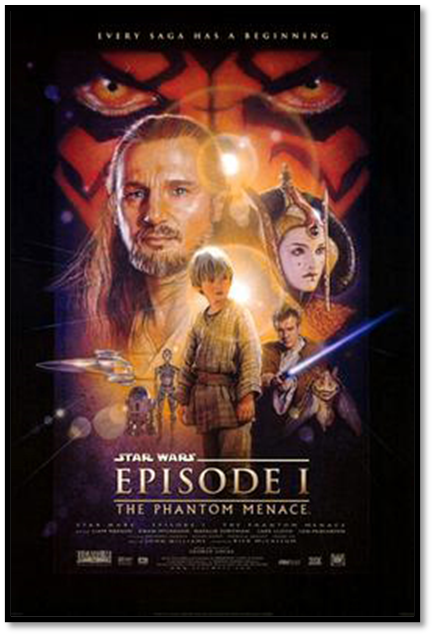
By http://www.impawards.com/1999/star_wars_episode_one_the_phantom_menace_ver2.html, Fair use, https://en.wikipedia.org/w/index.php?curid=899074

“Who is the boy’s father?” – Qui-Gon

He had no father” – Shmi

In the Principle of Causality, nothing in existence has come into existence without some cause. It follows the Latin maxim ex nihilo nihil fit, “out of nothing, nothing comes”. Typically, this maxim is applied in a cosmological sense regarding the origin of the universe but will also work in a chemical or biological sense regarding the origin of life. The fact that all flora and fauna exist requires that they have a cause. Everything which exists is only capable of existing in one of two ways, either as contingent or as necessary. It cannot be both contingent and necessary as that would violate a law of logic, the law of non-contradiction (LNC) which states that you cannot have “A” and yet have “A” at the same time to the same extent. A thing cannot exist contingently and necessarily at the same time to the same extent as that would invoke a contradiction. Those things which exist contingently indicate that it is possible for them not to exist. Those things which exist necessarily, do so by their own nature, it is not possible that they should not exist, shapes and numbers are said to exist in this fashion. But shapes and numbers lack a creative force. Furthermore, there exists two different types of causes, efficient cause, and instrumental cause. For Shmi to claim Anakin had no father is a logical impossibility. Given that Anakin had a beginning indicates that he exists contingently, it is therefore possible for him not to exist, and therefore he must have a cause. But what type of cause? It would have to be an efficient cause, a father. An efficient cause is that by which something comes to be in existence, an instrumental cause is that through which something comes to be in existence. That which is the efficient cause of some thing (or someone) indicates that being must create being, or that like produces like. As Anakin is a contingent being his cause must be efficient and not instrumental as like must produce like. Being, or existence, cannot give what it does not have. It follows logically therefore that he must have a father; the midi-chlorians cannot be the father of Anakin. Just as bacteria have only ever been observed to produce other bacteria, midi-chlorians can only produce other midi-chlorians, like produces like, as it has this type of genetic information to give. It cannot give what it does not have. A father can produce a child in his own “likeness” as he has the genetic information available to do so.

     Even Jesus of Nazareth has a father. I am not speaking of Joseph the husband of Mary as he acted as more of a surrogate to Christ’s actual Father. His birth did not come about in the usual, natural way, but exists as a singular supernatural event. Luke’s gospel records the exchange between Mary and the angel Gabriel. διὸ καὶ τὸ γεννώμενον ἅγιον κληθήσεται, υἱὸς θεοῦ· Which translates, “therefore the child to be born will be called holy—the Son of God.” (Lk. 1:35b, ESV)[1] The verb γεννώμενον (gennomenon) meaning, to be born, is a passive, present – tense verb. Passive verbs are those in which the subject is the one being acted upon (35b). Active verbs are those in which the subject is the one performing the act. The adjective ἅγιον (agion) meaning, holy, has the nominative case ending in the Greek, indicating that it is the subject of the verb γεννώμενον, “to be born”. The verse in its entirety shows a cause-and-effect type relationship. If “B” is the effect (35b), then “A” (35a) must be its efficient cause. So, what does the first part of the verse say (35a)? “The Holy Spirit will come upon you, and the power of the Most High will overshadow you”. If “A” (35a) is true, then it follows logically that “B” (35b) is necessarily true. Adjectives like ἅγιον (holy) are descriptors, they describe or modify the verb. Therefore, the adjective here describes that the one “to be born”, the verb, will by nature, be “holy”. A character or attribute that only God Himself possesses perfectly. The nouns υἱὸς θεοῦ (huios theou) translated “Son of God” have the nominative and dative case endings respectively. υἱὸς (Son) is nominative, indicating it as the subject of the verb κληθήσεται (klethesetai) meaning, to call or to name, and θεοῦ (God) has the dative case ending indicating possession, meaning that the one to be born will be “the Son of God” or literally, “God’s Son.”

     Moreover, there does not appear to exist within the biblical or historical framework of the church, any contention over Christ Jesus being the Son of God, save for the incident concerning Arianism which I will address later. The heretic Marcion promulgated the notion that Jesus existed as a phantom and did not come in the flesh. “Marcion… has attempted to overthrow the doctrine of the Incarnation and has vented a diabolical utterance declaring that He did not become flesh, nor was clothed with it, but that this was mere fancy, and illusion, a piece of acting and pretence….” (Emphasis added)[2] Such a notion wars against itself in light of the scriptural account of His person being in the flesh and he was therefore soundly denounced by various church fathers including Irenaeus, Tertullian, and Hippolytus et al., so they designated him a heretic. It was Tertullian who infamously stated, “What indeed has Athens to do with Jerusalem? What concord is there between the Academy and the Church? what between heretics and Christians?... Away with all attempts to produce a mottled Christianity of Stoic, Platonic, and dialectic composition!”[3] As for Marcion, he could not reconcile that the God of the Old Testament and the God of the New Testament were one and the same, so he devised a notion that there were two distinct gods. The angry God of the Old Testament and the loving God of the New Testament. As such, he rejected the Old Testament and embraced only portions of the New Testament and in doing so, created his own canon of the Bible. In it he included an abbreviated version of Luke’s gospel and only ten of Paul’s letters. I suppose he didn’t like what John had to say in his gospel, “by this you know the Spirit of God: every spirit that confesses that Jesus Christ has come in the flesh is from God, and every spirit that does not confess Jesus is not from God. (1 John 4:2-3a, emphasis added) He also stated that, “those who do not confess the coming of Jesus Christ in the flesh. Such a one is the deceiver and the antichrist. (2 John 1:7, emphasis added) So, Marcion did not ultimately deny the Sonship of Jesus Christ, only His being incarnatus.

     The heresy of Valentinus is connected with the Pythagorean and Platonic theory. Plato, in the Timæus, derived his impressions from Pythagoras and they derived their tenets originally from the Egyptians, and introduced their novel opinions among the Greeks. Valentinus took his opinions from them, he endeavoured to construct a doctrine of his own, yet, in point of fact, all he did was alter the doctrines of those thinkers in names only, and numbers, and had adopted a peculiar terminology of his own. Hippolytus remarked,And from this (system), not from the Gospels, Valentinus, as we have proved, has collected the (materials of) heresy—I mean his own (heresy)—and may (therefore) justly be reckoned a Pythagorean and Platonist, not a Christian.”[4] Valentinus was a contemporary of Marcion, and like Marcion adopted many of the same views; that all matter is evil, and as a result Jesus could not have come in the flesh and by extension there can be no physical resurrection. But again, like Marcion, he did not deny Jesus as the Son of God.

     As for Arius, “he reasoned that the expression ‘eternal father and son’ was an oxymoron. For the Father to have begotten the Son, He must be older than the Son; so there must have been a time when the Son did not exist…Arius argued that if the Son were without a beginning, then he would be a brother of God, and not a son.”[5] Arius attempted an appellation of Luke’s declarative phrase, in Acts 2:36 which states, “God has made him both Lord and Christ, this Jesus whom you crucified” (Emphasis added) and Paul’s descriptor of Christ’s person as “the firstborn of all creation” (Col. 1:15, emphasis added) as evidence for his contention that Christ was a created being, “there was once when he was not” and therefore not co-eternal with the Father. What Arius failed to understand was that both these references are positional, referring to His pre-eminence over all of creation, not His origin. The implication of Arius’ views did insinuate a denial of the Sonship of Christ. That “Son of God” was merely his epithet, not who He was in point of fact. But “in point of fact”, there is much evidence against such a view, and little to none in support of it.

     In response to the heretical behaviour of the Gnostic Maricon (A.D. 85-160), the gnostic Valentinus (A.D. 100-180), Arius (A.D. 256-336), et al., church fathers developed what become recognized as The Apostles Creed in the 2nd century ca. A.D. 140 which states in part, “I believe in God, the Father almighty, creator of heaven and earth. I believe in Jesus Christ, his only Son, our Lord….” (Emphasis added)[6] In A.D. 325 an ecumenical council was convened at Nicaea in response to the heresy of Arius. Out of which was developed the Nicene Creed that states in part, “We believe in one God, the Father Almighty, Maker of all things visible and invisible; And in one Lord Jesus Christ, the Son of God….” (Emphasis added)[7]. The second ecumenical council, The Council of Constantinople I in A.D. 381, echoed the council of Nicaea stating, “We believe in one God, the Father Almighty, Maker of heaven and earth, and of all things visible and invisible. And in one Lord Jesus Christ, the only begotten Son of God….”[8] (Emphasis added). Generally speaking, all councils and creeds were uniform in their construction, that Jesus Christ is the Son of God.


[1] Unless otherwise indicated, all biblical passages referenced are in the English Standard Version

[2] John Chrysostom, “Against Marcionists and Manichæans,” in Saint Chrysostom: On the Priesthood, Ascetic Treatises, Select Homilies and Letters, Homilies on the Statues, ed. Philip Schaff, trans. W. R. W. Stephens, vol. 9, A.

[3] Tertullian, “The Prescription against Heretics,” in Latin Christianity: Its Founder, Tertullian, ed. Alexander Roberts, James Donaldson, and A. Cleveland Coxe, trans. Peter Holmes, vol. 3, The Ante-Nicene Fathers (Buffalo, NY: Christian Literature Company, 1885), 246.

[4] Hippolytus of Rome, “The Refutation of All Heresies,” in Fathers of the Third Century: Hippolytus, Cyprian, Novatian, Appendix, ed. Alexander Roberts, James Donaldson, and A. Cleveland Coxe, trans. J. H. MacMahon, vol. 5, The Ante-Nicene Fathers (Buffalo, NY: Christian Literature Company, 1886), 85.

[5] David Beale, Historical Theology In-Depth: Themes and Contexts of Doctrinal Development since the First Century Vol.1. (Greenville, SC.: Bob Jones University Press, 2013), 232

[6] Select Library of the Nicene and Post-Nicene Fathers of the Christian Church, First Series (New York: Christian Literature Company, 1889), 205.

[7] David Beale, Historical Theology In-Depth: Themes and Contexts of Doctrinal Development since the First Century Vol.1. (Greenville, SC.: Bob Jones University Press, 2013), 241.

[8] Ibid., 281-2.


LEX LUTHOR AND THE PROBLEM OF EVIL: A THEODICY

  Part 2: The Philosophical Problem of Evil It may prove beneficial to the reader to know exactly what the term “theodicy” actually means.  ...